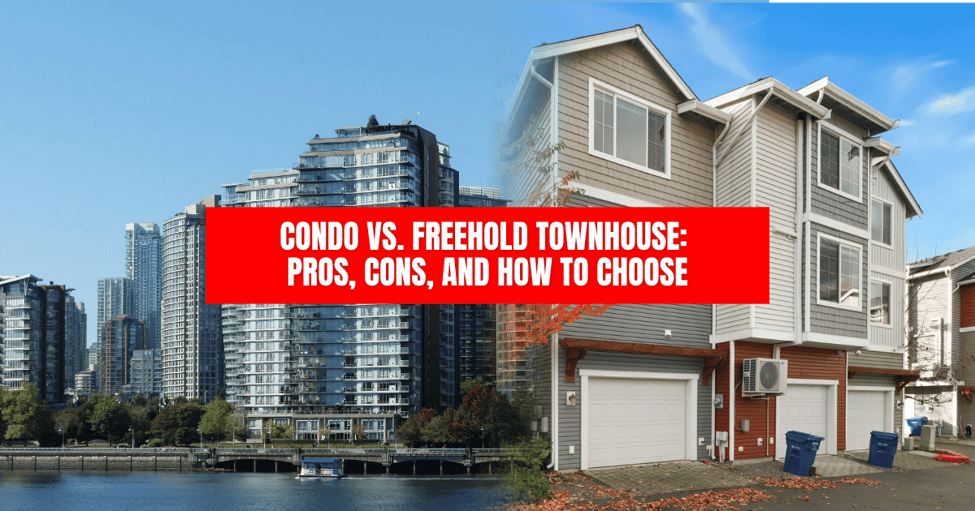
Buying a home is one of the biggest financial and lifestyle decisions you will ever make. But if you’ve decided that a detached single-family house isn't the right fit—whether due to rising prices or maintenance demands—you’ve likely landed on two popular choices: a condominium (condo) or a freehold townhouse.
At first glance, both options offer great housing solutions, but the underlying ownership models, financial obligations, and daily living experiences couldn't be more different. Buying the wrong type of property can mean unexpected monthly fees, restrictive rules, or maintenance headaches you weren't prepared for.
In this comparison guide, we’ll break down the key pros and cons of condos versus freehold townhouses so you can confidently choose the property that matches your budget, long-term goals, and daily lifestyle.
What Is the Difference Between a Condo and a Freehold Townhouse?
Before diving into the pros and cons, it’s essential to understand what "condo" and "freehold" actually mean—because the difference comes down to ownership structure, not just architecture.
Condominium Ownership: You own the interior space of your individual unit (from the walls in). The building structure, hallway corridors, exterior grounds, and shared amenities (like gyms or pools) are jointly owned by all unit owners and managed by a condo board.
Freehold Ownership: You own both the home structure (interior and exterior) and the land it sits on. You are solely responsible for maintaining the entire property, including the roof, foundation, driveway, and yard.
Condo Ownership: High Convenience, Shared Costs
Condos—whether high-rise apartments or condo townhomes—are ideal for buyers who prioritize convenience and low maintenance.
The Pros of Buying a Condo
Low Maintenance Living: Say goodbye to shoveling snow, mowing the lawn, or replacing a leaking roof. The condo corporation handles all exterior maintenance and structural repairs.
Desirable Amenities: Many condo developments feature shared perks you might not afford in a single-family home, such as fitness centers, swimming pools, concierge service, rooftop terraces, and party rooms.
Enhanced Security: Controlled entry, security staff, and surveillance cameras offer peace of mind, especially for frequent travelers or single occupants.
Lower Upfront Purchase Price: Condos generally carry a lower initial purchase price compared to freehold properties in the same neighborhood, making them an accessible entry point for first-time buyers.
The Cons of Buying a Condo
Monthly Maintenance Fees: You must pay a mandatory monthly condo fee (often called HOA fees). These fees increase over time and can significantly impact your monthly budget.
Bylaws and Restrictions: Living in a condo means following strict community rules. You may face limitations on pet size/number, renting out your unit, noise levels, or even what color curtains you can hang.
Risk of Special Assessments: If the condo’s reserve fund is underfunded and a major repair arises (like an elevator or roof replacement), owners can be hit with an unexpected, mandatory bill called a special assessment.
Freehold Townhouse Ownership: Full Control, Maximum Equity
Freehold townhouses offer a middle ground between condo living and single-family homeownership, giving you autonomy over your property without paying ongoing condo fees.
The Pros of Buying a Freehold Townhouse
No Monthly Condo Fees: Every dollar you pay toward your housing costs goes directly toward your mortgage and home equity rather than a shared management fund.
Complete Ownership and Control: Want to paint your front door neon green, renovate the kitchen, or adopt three dogs? As long as you comply with local municipal zoning laws, you have full freedom to modify your property.
Stronger Appreciation Potential: Land generally appreciates faster than structural units. Because you own the land beneath a freehold townhouse, these properties often hold stronger resale value over time.
Private Outdoor Space: Freehold townhomes usually feature dedicated backyards or private patios, perfect for gardening, pets, or outdoor entertaining.
The Cons of Buying a Freehold Townhouse
100% Maintenance Responsibility: You are completely on the hook for repairs. If the roof leaks, the driveway cracks, or the HVAC system fails, you must find and pay contractors yourself.
Higher Purchase Price: Freehold properties typically cost more upfront than comparable condo units due to the value of the underlying land.
Fewer Shared Amenities: You won't have access to a pool, gym, or on-site security guard unless you pay for private memberships elsewhere.
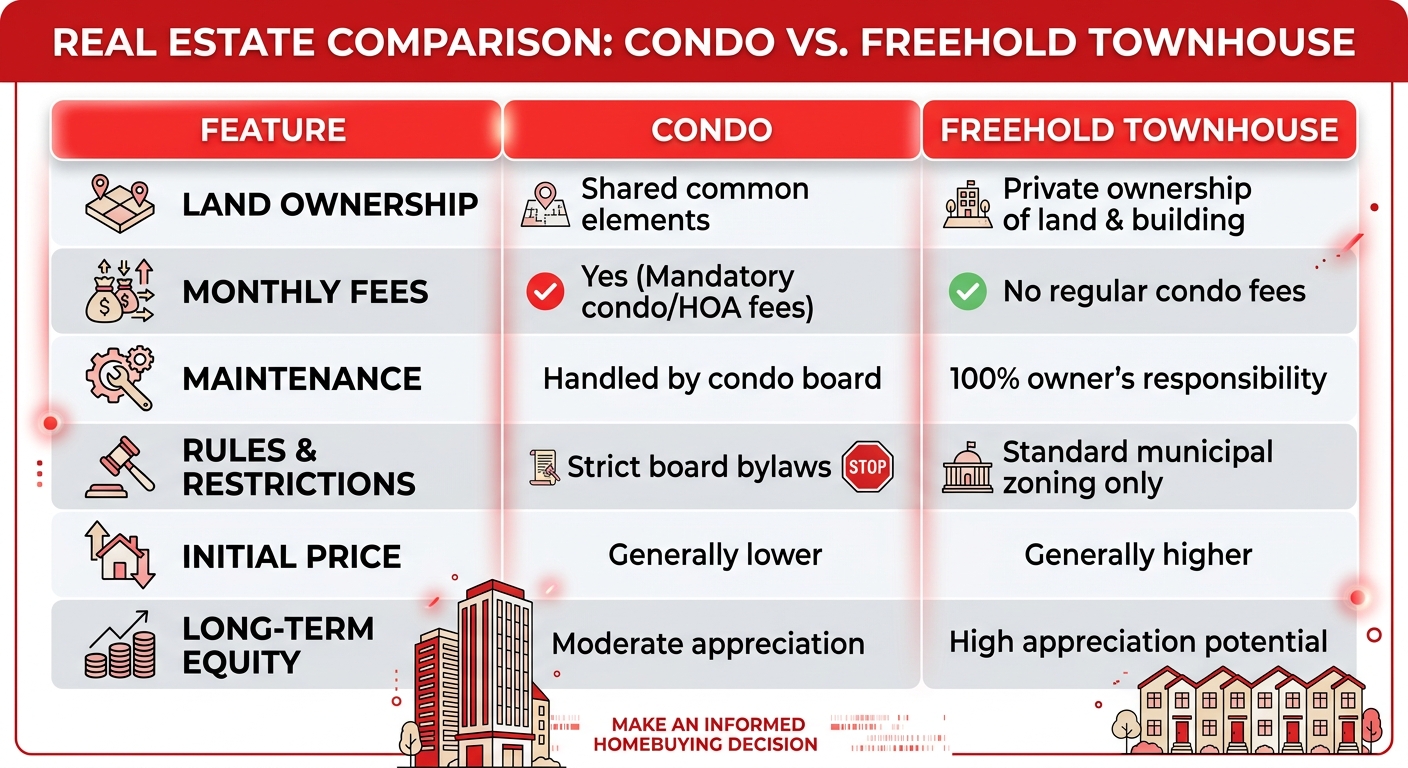
Direct Comparison: Condo vs. Freehold Townhouse
Which Option Is Right for You?
Choose a Condo if:
You travel frequently or want a "lock-and-leave" lifestyle.
You dislike outdoor chores like landscaping and snow removal.
You want access to luxury amenities on-site.
You are looking for a lower initial purchase price.
Choose a Freehold Townhouse if:
You want long-term control over your property without monthly fee hikes.
You value private outdoor space for kids or pets.
You are comfortable managing and budgeting for home repairs.
You prioritize maximum real estate appreciation and equity building.
Choosing between a condo and a freehold townhouse comes down to what you value most: the hands-off convenience of condo living or the freedom and equity growth of freehold ownership. Both options offer fantastic pathways to homeownership, but aligning your choice with your personal lifestyle and long-term financial plan is key to a happy purchase.
Ready to explore available condos and freehold townhouses in your preferred neighborhood? Let our expert team guide you through the local market and find the perfect property for your budget and lifestyle.
Ready to find your dream home?
Call me directly today at (604) 833-6840 for a personalized real estate consultation!