
Building long-term wealth through real estate is a proven path to financial independence, but not all property investments are created equal. While long-term appreciation is a great bonus, consistent monthly cash flow is what provides immediate financial freedom, covers debt obligations, and funds your next expansion.
Navigating today's dynamic market requires more than just buying a property and putting up a "For Rent" sign. Investors need deliberate, high-yield strategies tailored to current interest rates and tenant demands.
Whether you are buying your first investment property or looking to optimize an existing portfolio, this guide breaks down the top real estate investment strategies for maximum cash flow and how to execute them effectively.
What Is Real Estate Cash Flow and Why Does It Matter?
At its simplest, cash flow is the net income left over from an investment property after all operating expenses, taxes, insurance, and mortgage payments have been deducted from the total rental revenue.
NetCashFlow=GrossRentalIncome-(OperatingExpenses+DebtService)
Positive cash flow creates a safety buffer during market downturns, protects against unexpected vacancy rates, and gives you liquid capital to reinvest without relying solely on property value appreciation.
1. Short-Term Vacation Rentals (Airbnb & VRBO)
Short-term rentals (STRs) consistently generate higher gross revenue per square foot compared to traditional long-term leases, especially in high-demand tourist hubs, business centers, or drive-to vacation markets.
How it works: Properties are leased out by the night or week to vacationers and business travelers through platforms like Airbnb or VRBO.
Cash flow potential: High. Daily rates significantly outpace monthly long-term rates.
Key considerations: STRs are operationally intensive. Success depends on professional photography, dynamic pricing tools, frequent turnover cleaning, and strict adherence to local zoning laws and occupancy taxes.
2. The BRRRR Strategy (Buy, Rehab, Rent, Refinance, Repeat)
The BRRRR strategy is designed for investors who want to build a cash-flowing portfolio rapidly while minimizing the long-term capital left tied up in any single deal.
Buy: Purchase a distressed or undervalued property below market value.
Rehab: Renovate the property to force forced appreciation and command higher market rent.
Rent: Secure reliable, long-term tenants to establish consistent rental income.
Refinance: Perform a cash-out refinance based on the newly appraised, higher market value to recover your initial capital.
Repeat: Roll the tax-free cash-out proceeds into your next property deal.
Pro Tip: Keep repair budgets tight. Over-improving a rental home beyond its neighborhood standard reduces your cash-on-cash yield without increasing monthly rent.
3. Medium-Term & Corporate Rentals
Medium-term rentals (MTRs) target traveling nurses, relocating executives, digital nomads, and insurance claimants who need furnished housing for periods ranging from 30 days to 6 months.
Why it boosts cash flow: Tenants pay a premium for fully furnished spaces and flexible lengths of stay, providing 30% to 50% higher rental rates than standard 12-month leases.
Lower overhead: Unlike short-term rentals, MTRs feature significantly lower tenant turnover, fewer cleaning cycles, and minimal risk from local municipal short-term rental bans.
4. Multi-Family Properties (Duplexes, Triplexes, and Small Apartments)
Investing in multi-family properties offers built-in risk diversification and economy of scale under a single roof and mortgage.
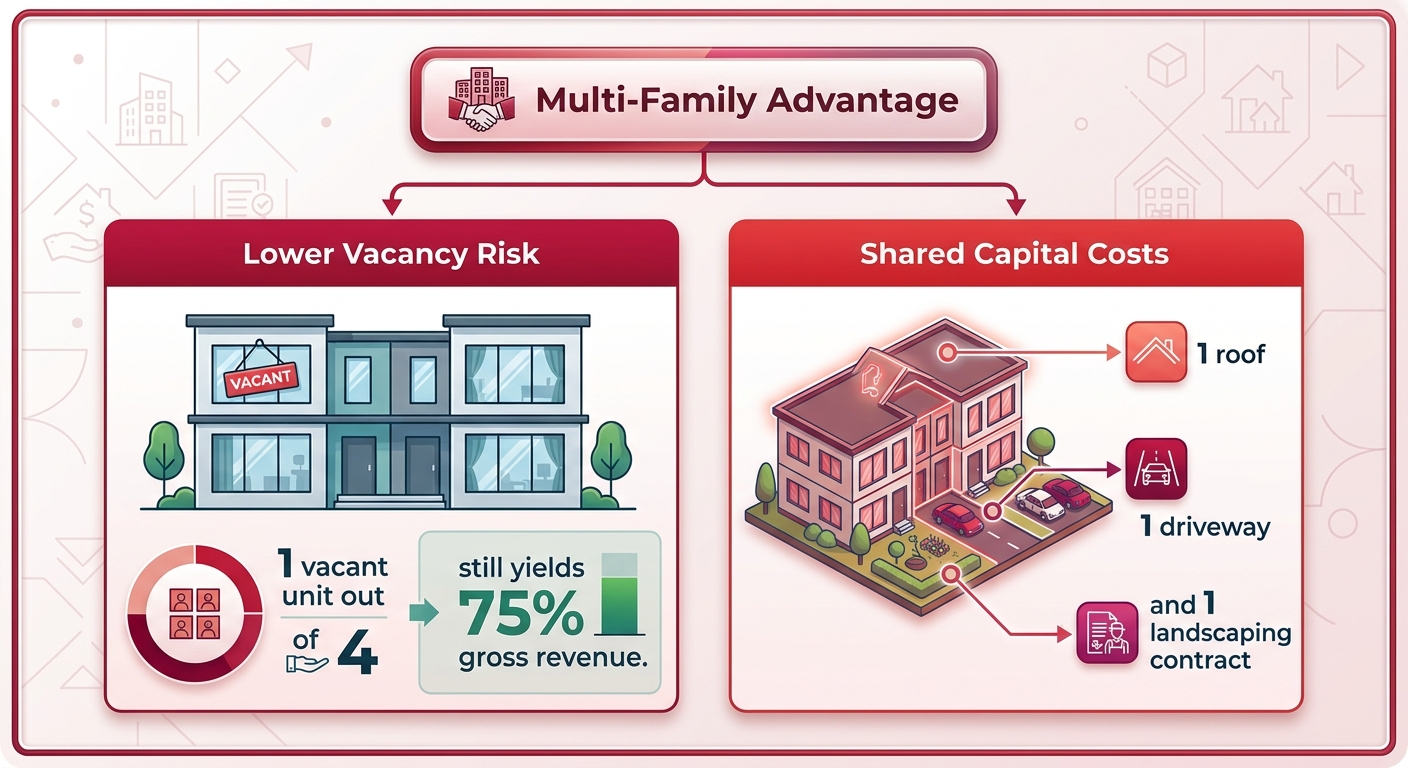
By consolidating management, maintenance, and debt service under one roof, multi-family investors lower their per-unit operating costs, leading directly to higher net operating income (NOI) and stronger monthly cash flow.
5. House Hacking
For new or low-capital investors, house hacking remains the single best strategy to jumpstart positive cash flow with minimal upfront capital.
How it works: Purchase a 2-to-4 unit property using a low-down-payment owner-occupant loan (such as an FHA or VA loan), live in one unit, and rent out the remaining units.
The financial gain: The rental income from the neighboring units covers most—if not all—of your monthly mortgage payment. Living housing-expense-free allows you to save substantial income each month toward your next pure investment property.
Quick Comparison: Choosing the Right Cash Flow Strategy
Take Control of Your Real Estate Portfolio Today
Generating strong, predictable cash flow doesn't happen by accident—it requires clear market analysis, smart financing structures, and disciplined property selection. By aligning the right strategy with your personal risk tolerance and available capital, you can build a resilient income stream that withstands changing economic cycles.
Ready to find high-yield investment opportunities or optimize your current real estate portfolio for maximum return?
Call us directly at 604-833-6840 for a free consultation with our real estate advisory team and book your strategy session today!